ABOUT THE PROGRAM with Julia Bullock, 2026 Festival Director & Matthew Swanson, Director of Choruses
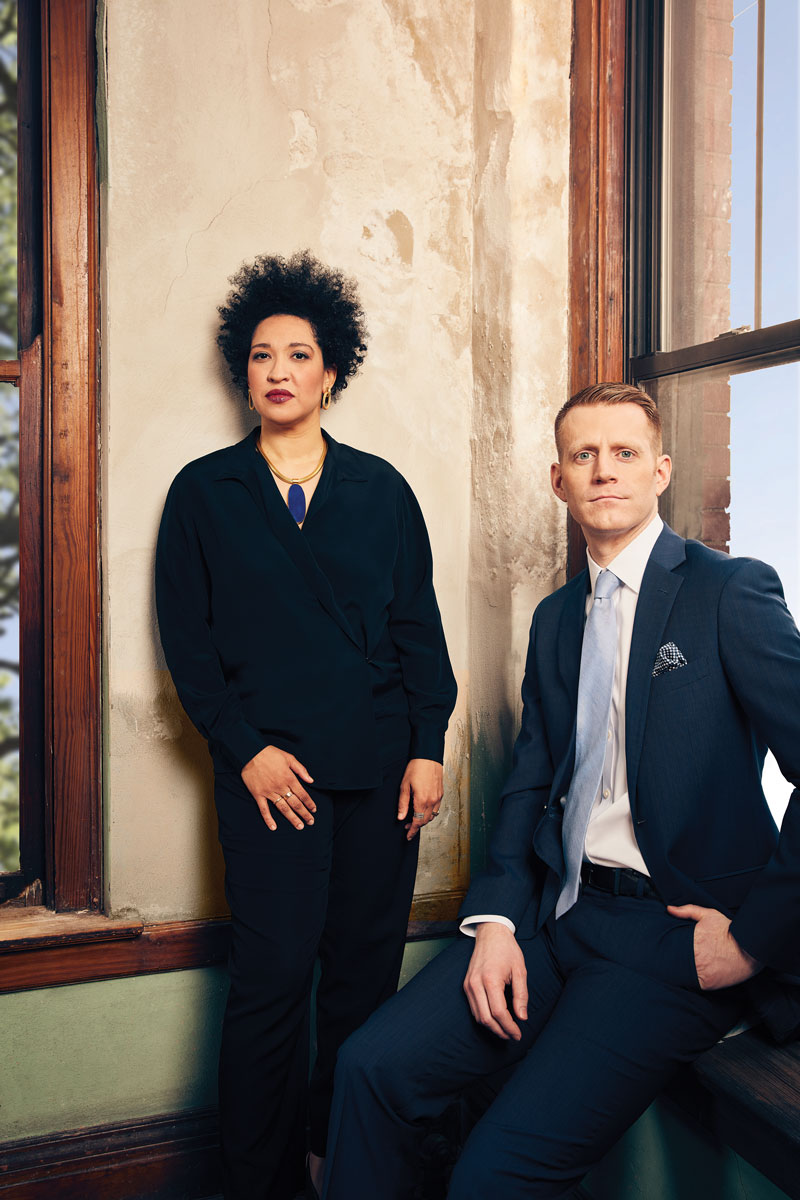
“Cincinnati is a city etched by water,” remarks 2026 Festival Director Julia Bullock.
The Ohio River has always been a natural boundary for the city and was the nation’s formidable natural barrier between the states that enslaved human beings in the South and the emancipated states in the North. “The Ohio River drew people here. It impacted who came to the city, who chose to stay and how the city developed,” states Bullock. “It was a gateway to freedom, the possibility of a different life and a new way for many.” The water became a symbol of eternal change and movement, and Cincinnati was the city that welcomed them.
Water’s multifaceted properties have fascinated artists from all disciplines. Water is often used as a metaphor for humanity’s collective and individual life journeys. In the May Festival, which has a large symphonic chorus and a large orchestra, Ralph Vaughan Williams’ A Sea Symphony is the first choice to explore these themes around “A Water’s Journey.”
“A Sea Symphony is one of the great choral symphonies,” states Director of Choruses Matthew Swanson. Unlike other choral and orchestra collaborations in the repertoire, Vaughan Williams has either the chorus or soloists singing almost the entire time. “It is truly a ‘sung symphony,’” Swanson says. For Vaughan Williams’ first symphony, what text did he choose? The text “is the absolutely incredible poetry by Walt Whitman,” an awed Swanson observes. “The poetry feels as fresh and contemporary today as it did in the pre-Civil War era. Much like Duke Ellington, Whitman is also speaking two languages or telling two stories at one time. There is a story about ships, water, ocean, flags and captains, etc. But more than that, the poetry is about journeying. It is about seeking — about searching and going into the unknown. The text is about the humanity that unites us all — the ideas that transcend boundaries of nationality or even, in a way, identity.”
What to pair with A Sea Symphony? Bullock thought back to the opening concert that featured the texts of Langston Hughes. “What I loved is that Langston Hughes was a seaman himself, and being on the ocean became one of the most profound and defining experiences of his life. It allowed him to explore the world, gave him an opportunity to no longer feel locked in by any environment. The freedom and liberation that he felt was a turning point in his life, and it influenced how he wrote.”
Duke Ellington, too, faced a watershed moment when he wrote The River. “By 1970, Ellington’s philosophical and compositional perspective was becoming more informed by a spiritual consciousness that no doubt reflected awareness of his own mortality,” writes Dr. Tammy L. Kernodle in her program note about the work. “Thus, the narrative of The River became for Ellington a spiritual metaphor for life, death and anticipated rebirth in heaven.”
“Water has a range of power from the immense and volatile to the gentle and soothing,” reflects Bullock. “Water can be as much healing and cleansing as it can be damaging and frightening. We need water to live, but too much will harm us. It is within all of us. These are the ideas that Ellington, Whitman and Vaughan Williams are touching upon in their works.”