About the Program
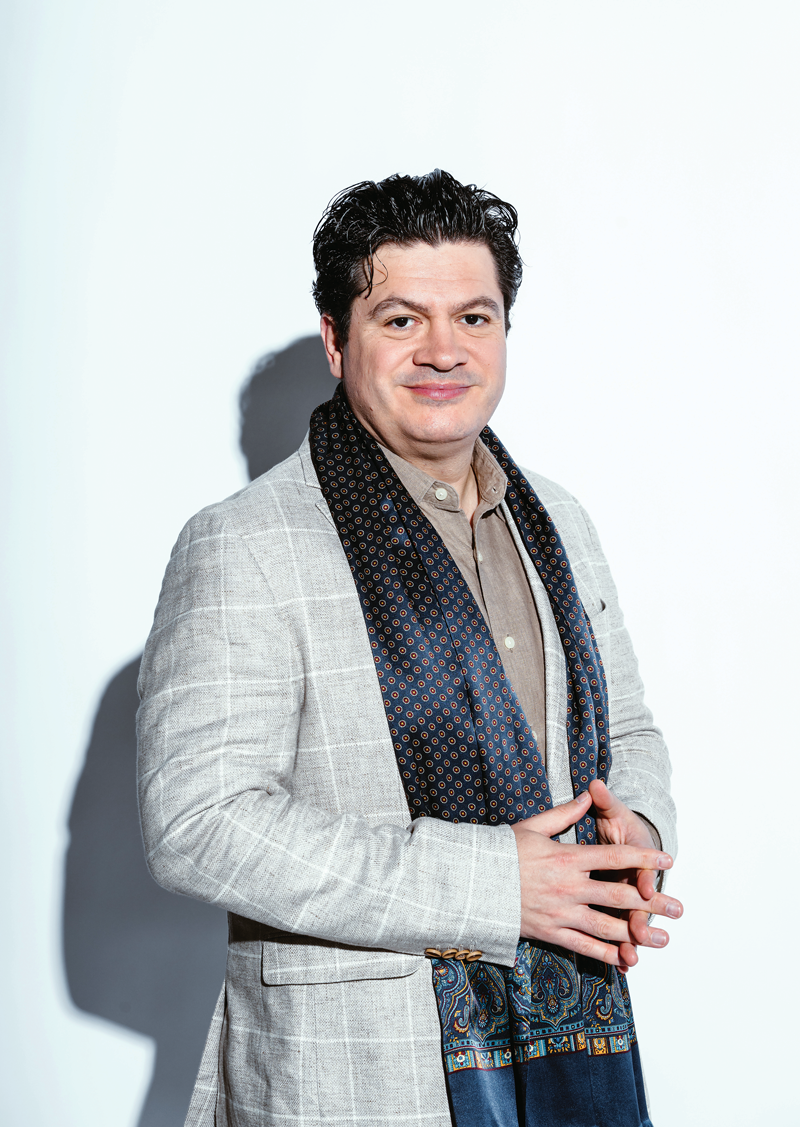
George Enescu’s music is so singular that it can be difficult to describe. In an interview with Fanfare, CSO Music Director Cristian Măcelaru hazards an attempt: “a Straussian approach to French orchestration, a Wagnerian understanding of harmony, and very strong smells of Romanian folklore.”
Măcelaru would know better than most. As the artistic director of the George Enescu Festival, he is the most prominent exponent of the Romanian composer’s music on the world stage, recording an authoritative account of Enescu’s orchestral works with the Orchestre National de France — including the choral-orchestral Symphony No. 3.
Given the similarities between their writing, Măcelaru felt a tone poem by Richard Strauss would be well-matched with Enescu’s symphony. In Don Quixote, the title character, represented by the cello, and his sidekick Sancho Panza, represented by a solo viola, undertake a hero’s journey as perilous as it is hilarious. Meanwhile, Enescu’s symphony follows an arc which, to Măcelaru, echoes Dante’s Divine Comedy: It begins in purgatory, progresses through a hellish second movement and ends in Paradise, joined by a wordless choir.
Cristi now associates a theme in that heavenly final movement with his father, Dorel Măcelaru, who died in 2020. Today, he says he is almost always moved to tears while conducting it. To him, the moment feels like “an enormous musical hug.”
“There's this incredible moment where all the themes Enescu has used before appear in the movement, like they're constantly interrupting each other. But it's incredibly beautiful,” Măcelaru says. “This is what it must feel like to arrive in a place where you're meeting everybody you know again.”
—Hannah Edgar