ABOUT THE PROGRAM with Julia Bullock, 2026 Festival Director & Matthew Swanson, Director of Choruses
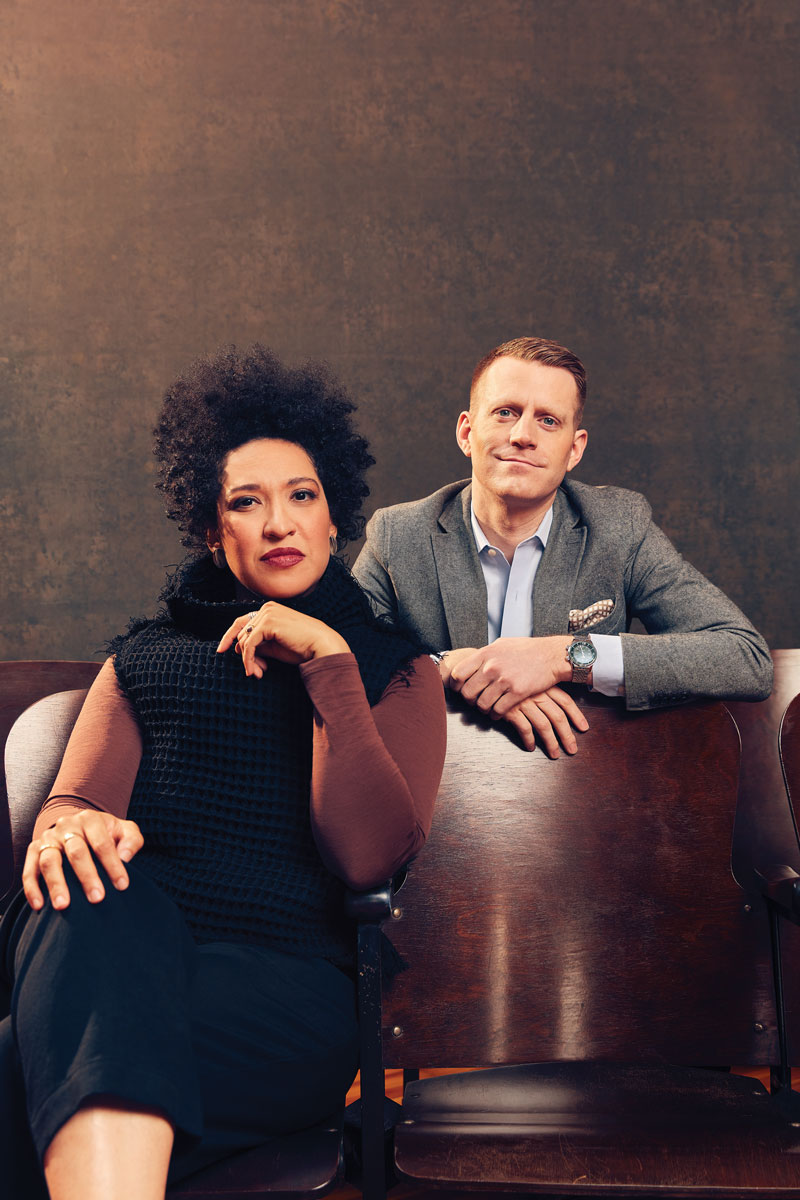
In the initial seasons of the May Festival, concerts often featured complete symphonies (with and without chorus), a selection of arias by a single soloist (or several soloists), oratorios and excerpted choral anthems, and instrumental concertos. “The early May Festival concerts were varied displays of musical scale and genre,” notes Director of Choruses Matthew Swanson. The spirit of those eclectic programs inspired the opening concert of the 2026 season. The concert begins with a fanfare-like choral anthem, followed by a set of orchestrated art songs. The concert concludes with an “eclectic Mass,” an assembled collection of sacred choral works that spans five centuries.
Bruckner’s Psalm 150 was intended for a festival much like our own — a large choral and orchestral festival in May, though in late 19th-century Vienna. While it is a May Festival “debut” for the psalm, the work calls to mind the Festival’s distinctly Germanic and Austrian roots.
The set of solo songs is principally based on the work of poet and writer Langston Hughes, a contemporary of composers Margaret Bonds and Alexander Zemlinsky. “The first song of Hughes that Bonds set to music was the poem ‘The Negro Speaks of Rivers,’” recalls 2026 Festival Director Julia Bullock. “When Bonds first read the poem, it changed her life, because she recognized herself and a new-found calling in Hughes’ writing.” This first composition led to a close collaborative relationship between Bonds and Hughes that continued for years. “They memorialized and supported each other’s work,” states Bullock.
Across the Atlantic Ocean, Zemlinsky was able to read poetry by Hughes and other writers of the Harlem Renaissance via German translation in the 1929 anthology Afrika singt: eine Auslese neuer Afro-Amerikanischer Lyrik (“Africa Sings: A Selection of New African American Poetry”). “I thought it would be a really interesting way to hear these poems,” Bullock remarks. “An immediate response to these texts so clearly impacted these composers, even though they were separated by a literal and metaphorical ocean.”
“A robust and vibrant set of musical conversations will take place at this concert,” states Swanson. Much as Hughes, Bonds and Zemlinsky were in real-time exchanges with each other, the Eclectic Mass brings composers across centuries into dialogue within the form of the Mass Ordinary. Our eclectic Mass includes music from the height of the Renaissance, the essence of the Baroque period and the heart of the 20th century. These varied traditions are knit together by the music of guest composer Carlos Simon and its accompanying spoken-word message of universality. As a sacred ritual and an artistic form, the Mass has been a mainstay of the vocal repertoire since before the advent of Western music notation. It’s remarkable how many ways people have utilized this form to express themselves.