Program Note
Harlem & Hughes on My Mind…
by Julia Bullock
It was thrilling to be invited as the first singer to have an artist residency at The Metropolitan Museum of Art (2018-19). [1] My time at the Met set a precedent, and Cincinnati’s May Festival has allowed me to have the same, attentive approach — for almost two years preceding, I had conversations and went on site visits to get acquainted; my mind reeled as I walked through the available performance and gallery spaces, and took my time to consider the almost endless program possibilities.
Although most of the programming for the May Festival is unique to this city and its people, this program featuring the music inspired by Langston Hughes’ writing, is one I wanted to remount here.
The insightful MetLiveArts General Manager, at the time, was Limor Tomer. When I asked her what she hoped to accomplish with a performance residency in a space dedicated to visual art, she said, “I’m aiming to remove the threshold of entry to the museum.”
Hearing that, I began to research what “thresholds” had, intentionally or not, encouraged or discouraged people to visit such an encyclopedic visual representation of world culture that was presumably open to us all. I learned about a 1969 exhibition entitled, Harlem on My Mind: Cultural Capital of Black America, 1900–1968.
In the words of The Met’s then-director Thomas P. F. Hoving:
“Harlem on My Mind” is this Museum’s attempt to plumb the secret of Harlem, of its unique achievements and contributions to American life, its energy, genius, and spirit. I don’t know of any institution better qualified, by reason of its basic humanist orientation, its acute and intelligent sensitivity for a disparate range of cultural expressions, better qualified than this one to attempt such an exhibition.
Our hope for the exhibition is that it communicates a sense of place and a way of living. That it engenders an appreciation of the tragedies and triumphs of Black Harlem. That it make us realize that we must begin to look to the great Negro past for our understanding of the American experience, and look to it as well for whatever common hope we have for the future.
While Hoving’s words speak to the Museum’s positive intentions for the exhibition, and honored the powerful role photography was positioned to play in the arts scene of B/black people in the United States, it was a controversial show that was met with severe criticism in cultural and social arenas. The most heated and prolonged reactions manifested in protests enacted by members of the Black community, which lasted from before the opening through to the closing of the exhibition.
I was also fascinated that the title of the exhibition, “Harlem On My Mind”, was taken from a song that composer Irving Berlin wrote for the vaudeville and Broadway singer, actor and dancer Ethel Waters. Her recording was released in 1933, as a parody of her cross-Atlantic counterpart, American-born French entertainer and activist, Joséphine Baker.
In my efforts to explore the history and intentions of The Met,[2] and also to honor what was realized in actuality, I decided to put together a program of music and poetry that highlighted what I love about Harlem’s rich history, and was a celebration of Harlem during its Renaissance.[3]
The Harlem Renaissance was something extraordinary. With Black Americans coming to New York in order to escape the torments of Jim Crow, an influx of creative personalities congregated. The vast amount of cultural influence that emanated from 125th Street and the surrounding blocks had yet to be experienced in America. Today we still feel how the cultural pulse of the Harlem Renaissance inspired and developed all artistic expressions.
The notated material in music and literature of that period is something for which I’m so grateful. Until that time, so few B/black voices had the opportunity to record or transcribe their own experiences; the opportunity to document was reserved for the privileged few, and often done through the lens of a white person’s perception.
Since the 1920-30s, more and more Harlem-based artists have been celebrated across the globe—so why focus on Langston Hughes?
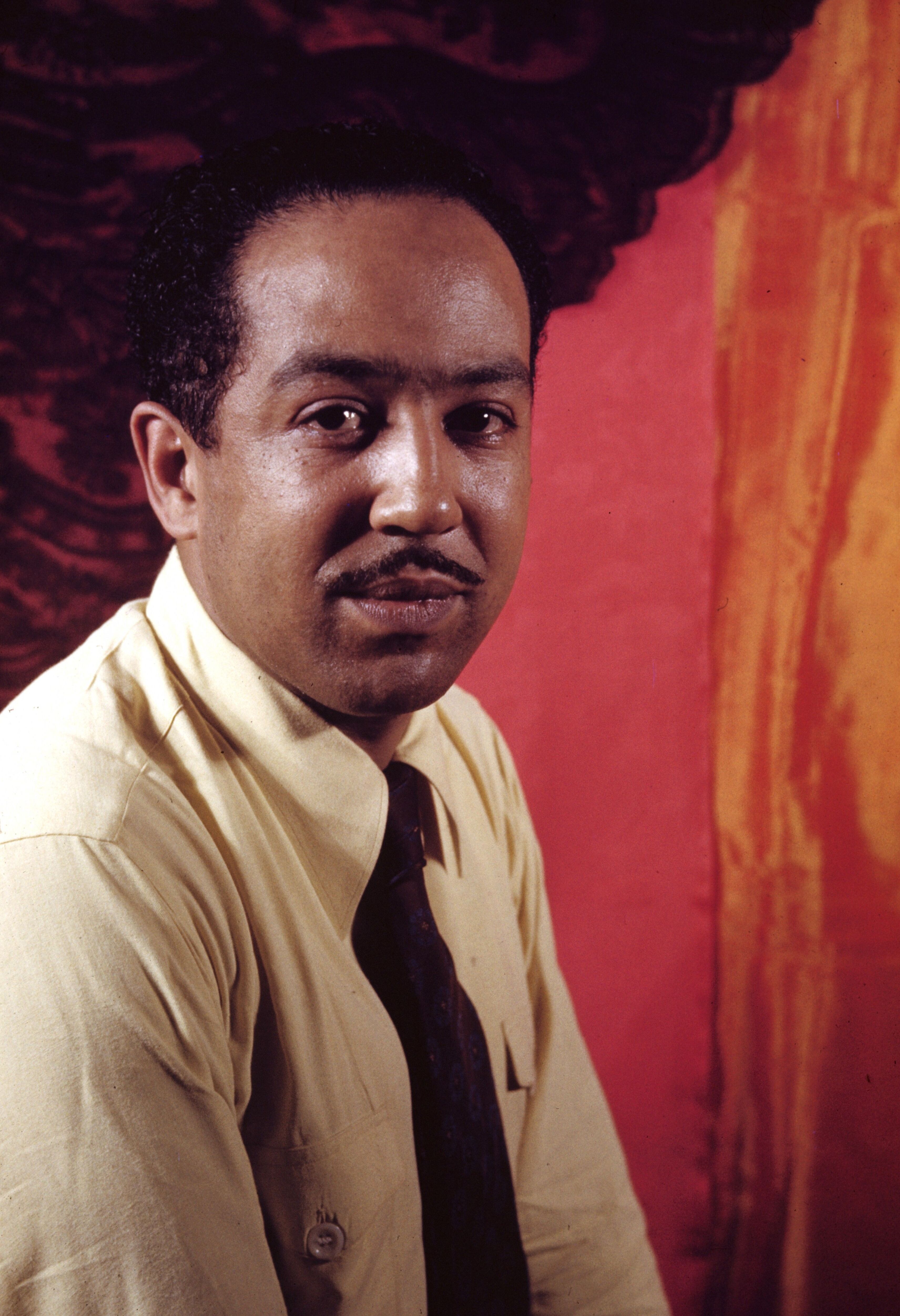
From the start of Hughes’s career through to our time, composers in all disciplines of music have been widely drawn to set his words. Known as the “Poet Laureate of Harlem,” Hughes also wanted to be a songwriter. Whether working on poetry, prose, or a libretto for an opera with Kurt Weill, his lyrical voice seemed to guide his writing. From an early age, he knew he wanted to write, and seemed to view his art in the context of social consciousness; taking on the responsibility to share the Harlem Renaissance experience—the Black American experience—with the rest of the world.
I was surprised to find that several of the settings of Hughes’s poetry composed for the classically-trained voice to which I have had access and been drawn to were written by living white men. The fact that there are many white men is explicable in itself, since traditionally most composers given the chance to study western classical composition techniques are from that particular demographic. But the fact that these composers are all living is what feels more significant. Hughes, “the people’s poet,” sought to re-educate both audience and artist, so presumably, if a person were sensitive enough, they could find a way to tap into Hughes’ writing and illuminate it through music.
Although much of Hughes’ work was culturally focused, many of the readings and musical settings on this program have to do with the celebrations, perceptions, losses, struggles, and wonder of the human experience, and in particular, the unique New York experience.
—Julia Bullock
To make words sing
Is a wonderful thing—
Because in a song
Words last so long.
My seeking has been to explain and illuminate
the Negro condition in America
and obliquely that of all human kind.
I guess I’m what I feel and see and hear . . .
Hear me.
Langston Hughes (1902–1967)
[1] Julia Bullock’s 2018-19 artist residency was made possible by the Chester Dale Fund and the Stavros Niarchos Foundation
[2] The Metropolitan Museum of Art is on the island known as Mannahatta—now called Manhattan—in Lenapehoking, the homeland of the Lenape people.
[3] A Dream Deferred was originally made possible by The Howard & Sarah D. Solomon Foundation