The Black Composer and the Question of American Musical Nationalism
by Dr. Tammy l. Kernodle
“The future music of this country must be founded upon what we called Negro melodies. This must be the real foundation of any serious and original school of composition to be developed in the United States. … These beautiful and varied themes are the product of the soil. They are American. … These are the folk songs of America, and your composers must turn to them.” —Antonín Dvořák
Black culture and Black composers have been central to the formation and evolution of an American sound. Although the discussion of an American nationalistic sound or school of composition predated 1892, a certain urgency developed with the arrival of Antonín Dvořák. After the composer made the assertions above during an interview with The New York Herald, an ongoing rhetorical — and musical — debate ensued. Much of the musical debate was directed at Dvořák’s Symphony No. 9, From the New World, which modeled, more directly, how the folk spiritual — the ritualized sacred songs of enslaved Africans — could be reimagined through the structure and form of the late Romantic-era symphony.
The Second New England School, a collective of composers that included Amy Beach, Edward MacDowell, George Chadwick, Horatio Parker and Arthur Foote, was among the first to challenge Dvořák’s assertions. What is less discussed in the existing historiography is the emergence of another collective of composers who built on Dvořák’s ideas, centering Black music, and thus the Black composer, in this conversation. Commonly referred to as the “Manhattan School” were composers Will Marion Cook, Harry T. Burleigh, Bob Cole, James Weldon Johnson, J. Rosamond Johnson, James Reese Europe and Scot Joplin, who contributed to the formulation of a nationalistic sound that reflected a separation from pan-European traditions. They believed that the question of an American aesthetic was directly tied to a Black intellectual tradition that advanced a larger civil rights and social justice agenda. At a time when racial inferiority served as an impetus for public policy that disenfranchised Black citizens and sanctioned the use of racialized violence to ensure “law and order,” these Black composers and others emerged as part of a Black intelligentsia that shaped the political and social landscape of America.
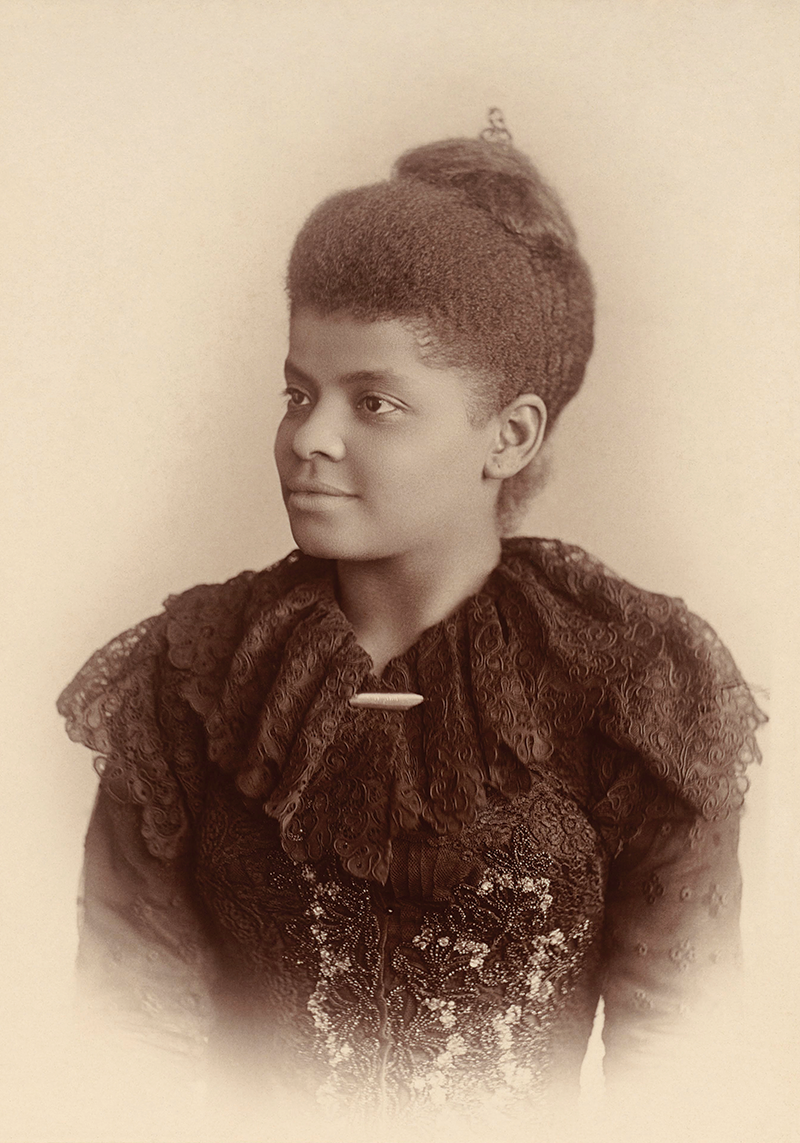
Much like public intellectuals such as Booker T. Washington, W. E. B. Du Bois, Anna Julia Cooper and Ida B. Wells, who advanced strategies of racial uplift through books, oratory, education and cultural labor, Black composers and concert artists used music as a means of challenging the prevailing misrepresentations of Blackness. The Black Composer spoke through notes, rhythms and prose that evolved out of the Black American experience. Reimagined forms of these idioms not only shaped the notion of an American sound aesthetic but also fostered transnational, interracial cultural dialogue.
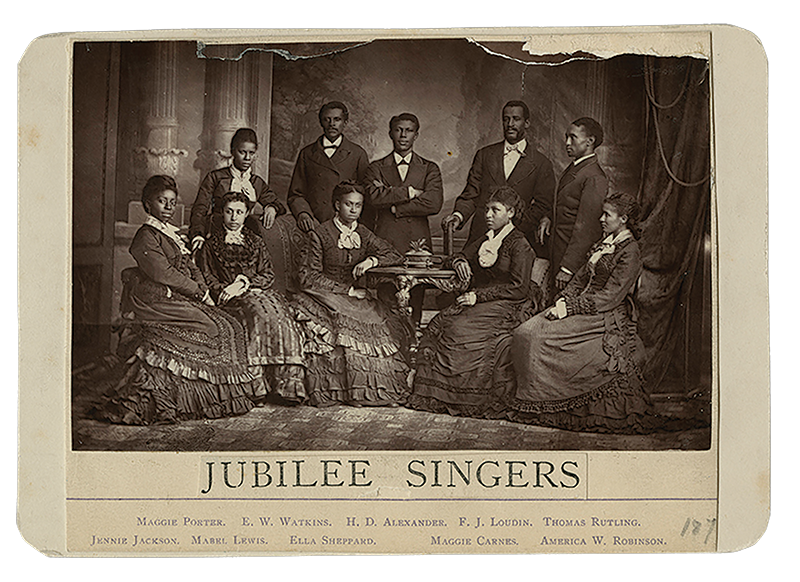
This dialogue did not begin in the 1890s with Dvořák and the Manhattan School, however. It extends back to the music of early 19th-century composers Francis Johnson, James Hemmingway and Justin Holland, and it entered another era in 1871, when the Fisk Jubilee Singers launched the first of several successful tours that laid the groundwork for spirituals to become the defining sound and language of Black identity and Black classical music.
The compositional voices heard throughout this year’s May Festival reflect different historical epochs, compositional approaches and generational identities, and illuminate the diverse cultural ecosystems that have shaped the sonic identity of the Black Composer. All have been key not only to the evolution of the American sound but also foreground to the progression of the Black classical aesthetic.
Any discussion about American musical nationalism must acknowledge the existence of a separate Black classical aesthetic. In doing so, we concede that while there have been moments in America’s cultural history in which the music of a particular Black composer or generation of composers has been championed by the prevailing classical music industry, for the most part, the Black Composer’s voice has been muted within major American concert halls. The Black Composer’s voice has instead resonated the loudest in spaces that cultivated the development and progression of a Black Intellectual tradition — Black colleges, Black intellectual salons, Black churches and grassroots, community-based conservatories. As a result, the Black Composer’s voice, like that of many American composers, has been denied the opportunity to converse with and challenge the supremacy of the pan-European canon in the concert hall. Therefore, the Black classical aesthetic still isn’t fully understood within the historical and sonic context of American classical music.
While this conversation limits its discussion of the Black classical aesthetic to the creative and intellectual work of the Black Composer, it should be noted that this idiom has also been shaped by the performances of Black concert artists, the interpretive skills of Black conductors, and the patronage of educators and impresarios. All of these forms of cultural labor demonstrate how Black creatives expanded the context of the Western European concert tradition through the performance and interpretation of canonical works that emphasize the Western European aesthetic or the production of works reflecting mastery of classical music conventions, often using idioms that may or may not refer to Black identity, cultural practices, or lived experiences.
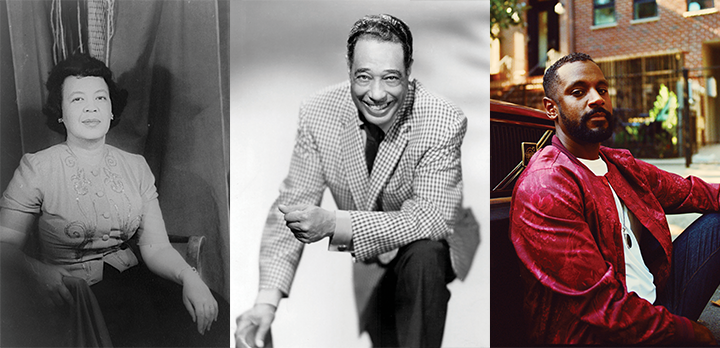
The compositional voices featured during this year’s Festival also reflect the ideological intentions of the Black classical aesthetic through works by non-Black and non-American composers. The pairing of Margaret Bonds, William Grant Still, Duke Ellington and Carlos Simon with George Gershwin, J.S. Bach, Alexander von Zemlinsky and others demonstrates how the resonant power of Black expressive culture — and the undercurrent of resilience, resistance and perseverance that pervades it — has circumvented the boundaries of race, geography and class distinction. Collectively, their compositions illuminate how Black folksong, dance and poetic idioms that evolved out of the lived Black experience have served as exemplars of America’s cultural heritage.
The author, Dr. Tammy L. Kernodle, is University Distinguished Professor and the Park Creative Arts Professor of Music at Miami University.